Saturday, August 29, 2020

SAVAGE CINEMA TIME CAPSULE: TOP 50 FAVORITE MOVIES 2010-2019-NUMBERS 20-11

OK kids, we are here!!! Close to the tip-top of my favorite films from the past decade and yes, it has been a long time coming after as the writing of this series is concerned. But, I am here and more than ready to dive in to the films that meant the absolute most to me over these last ten years. So...let's get to business. 

20. "THE GRAND BUDAPEST HOTEL"  DIRECTED BY WES ANDERSON (2014)
It was such a masterfully stunning achievement! To think, after a more than illustrious career that included nothing less, but not limited to, "Rushmore" (1998), "The Royal Tenenbaums" (2001), "Fantastic Mr. Fox" (2009) and "Moonrise Kingdom" (2012), Writer/Director Wes Anderson emerged with a film experience that eclipsed everything he had previously unveiled, so much so that all of his prior films felt like warm-ups to this one. 

Starring a wonderful Ralph Finnes plus seemingly everyone who has ever made an appearance within a Wes Anderson film, "The Grand Budapest Hotel" is a feast of a visual wonderland (I swear, every single frame of the film could exist as its own work of art to be displayed upon a wall) that s also a masterpiece of storytelling construction, plotting and most especially, language, a quality that made the film a sheer delight to just listen to as dialogue of this high quality is of such rarity. 

This film is a succulent fantasia, a luxurious yarn that spans four time periods yet is largely set in the mythical Eastern European location of Zubrowka circa 1932, with the final glory days of the titular hotel as the focal point. For all of its whimsy and delight in a story that features a murder mystery, a stolen painting, prison escapes, ferocious villains, youthful romance, delectable baked goods, rapid snowy chases through the mountains, and the building friendship between the hotel's masterful concierge and a young immigrant/hotel Lobby Boy in training, Anderson houses a deeply melancholic tale, a mournful ache for the lost romance of a time, place and era and the relationships which shaped us therein. And in doing so, it is a film that is a love story to the art of storytelling itself and the storytellers who weave those very dreams that we are transfixed and transformed by.  

Wes Anderson is unquestionably that type of a storyteller and his film, "The Grand Budapest Hotel" is precisely, beautifully that type of a story.  
(Originally reviewed March 2014)

19. "BRIDESMAIDS"  DIRECTED BY PAUL FEIG (2011)
The best comedy of the decade.

Paul Feig, re-teaming with his "Freaks And Geeks" partner, Producer Judd Apatow and from a brilliantly conceived and deeply felt screenplay co-written by the film's star Kristin Wiig (who herself delivers a richly multi-layered performance) flew exceedingly far beyond just depicting women fronting a cheerfully vulgar and raucous hard R rated comedy that could get itself just as nasty as any male driven comedy released since John Landis' "National Lampoon's Animal House" (1978)

For all of the copious and loud laughs (many of them arriving from Melissa McCarthy's star making, force of nature performance), what was achieved was a beautifully designed ode to the bonds of female friendships as Annie Walker (Wiig), a woman in early middle age now experiencing a downturn trajectory in her life who is now fearing the loss of her best friend Lillian Donovan (Maya Rudolph), who is about to get married and move permanently from Wisconsin to Illinois. 

As with the very best films in the Apatow movie universe, "Bridesmaids" creates a story and full tapestry of characters that you love spending time with as much as the filmmakers and actors did themselves, while also valiantly leaping over every conceivable cliche in the romantic comedy genre. In doing so, Feig always finds the greater, and often more painful, truths which ensures that as wild as the film becomes (and often is), we are always witnessing a film about real people in real situations dealing with real emotions. And that is where "Bridesmaids" strikes gold over and again as it is a comedy that has the strength to be about failure, envy, jealousy, competition, self-loathing, insecurity, class warfare the clash of the person you once were and the person you are still wishing to become, and the difficulties of maintaining friendships as we age.

Paul Feig's "Bridesmaids" more than shook up the typically male driven adult comedy genre. This is the film that raised the bar.      
(Originally reviewed May 2011)

18. "THE WOLF OF WALL STREET"  DIRECTED BY MARTIN SCORSESE (2013)
Blistering, unrepentant and nuclear fueled, Martin Scorsese's rapacious satire, starring a sensationally mammoth performance from Leonardo DiCaprio as stockbroker Jordan Belfort, is one of the cinematic MASTER's two very best films since his now iconic "Goodfellas" (1990)--the other being his criminally undervalued and downright gorgeously artful children's fantasia "Hugo" (2011), but for me, this film does carry the edge.

Epic and sprawling, Scorsese's morality tale of the stupendous rise and spectacular fall of a young stockbroker who eventually builds his own firm and engages in rampant corruption and fraud, is a veritable blitzkrieg of a film experience. It moves like a cocaine injected rocket for its three bursting at the seams hours, as its take-no-prisoners aesthetics perfectly captures the enough is never enough/greed is GREAT mentality of its characters and is visualized via an ocean of mega-excess and Bacchanalian debauchery.

Yet, for all of the vulgarity and profanity on rampant display, what Scorsese has devised is a swan dive into the maelstrom of avarice, grossly disturbing opulence and over-consumption and male driven hubris of our society, which is then further contributing itself to our own societal spiritual decay with our increasing soullessness, and severe obsessions with fame at the expense of our own moral character and compassion. It is an extreme film for extreme times and as often laugh-out-loud as it is, "The Wolf Of Wall Street" is ultimately a tsunami of rage and sorrow at our own cultural downfall, and absolutely none of us are let off of the hook--as evidenced by the film's killer final shot.        

Leonardo DiCaprio once again showcases why he is one of his generation's finest actors walking the planet. If you still do not believe that statement, just watch the sequence where he has to descend a flight of stairs while high on Quaaludes. That scene alone should have guaranteed him an Oscar!
(Originally reviewed December 2013)

17. "BIRDMAN OR (THE UNEXPECTED VIRTUE OF IGNORANCE)"
DIRECTED BY ALEJANDRO G. INARRITU (2014)
This movie was high wire, virtuoso filmmaking that represented a career peak for Alejandro G. Inarritu. Visually dynamic, psychologically harrowing, euphorically self-congratulatory and fueled by a kinetic energy typically reserved for live theatrical performances, Inarritu's film, starring a riveting Michael Keaton as a former superhero movie box office champion who embarks upon a precarious career re-invention as a serious playwright/Director/actor is precisely the type of film that is impossible to ignore due to the audaciousness of its presentation and the intense commitment of every participant involved.

"Birdman," in addition to housing a collective of searing performances, all the way from the main top tier cast (which includes Edward Norton, Naomi Watts, Zach Galifianakis, and Emma Stone) to momentary players (Bill Camp as a homeless man literally howling a soliloquy from Macbeth on the New York City streets is an intensely unforgettable sequence), as well as a staggeringly innovative drum score by Composer/musician Antonio Sanchez, Inarritu unveils his film through a series of dizzyingly complicated unbroken long takes, all of which contributes to the fever dream aspect as well as the feverish reverence of the entire enterprise during which one missed cue would unravel the complete experience...much like the sanity of Keaton's character.   

In addition to existing as a wholly engaging backstage drama, Inarritu has fashioned what could be viewed as a dissertation about success and failure in the 21st century, a cultural commentary about the nature of truth and reality in our social media addicted age, the inspirational and destructive uses of the ego and hubris, plus the validity and existence (or non-existence) of art when superheroes and toys rule the day, therefore making the characters as well as all of us complicit in our artistic and societal downfall.  

An electrifying experience without question.
(Originally reviewed November 2014) 

16. "PARASITE" DIRECTED BY BONG JOON-HO (2019)
By now, I am certain that you have seen this outstanding film, one that made the more than deserved victory lap at this year's Academy Awards by winning Best Foreign Film and Best Picture. But, to be fair and just in case, I will refrain from producing spoilers here.

Even so, what I feel more than comfortable expressing at this time is that Bong Joon-ho's "Parasite" is an absolute masterpiece from top to bottom, inside and out. The film about two families (one wealthy, one poor) and what happens when they intersect, is meticulously conceived, written, acted and directed, making for a devilishly multi-layered feature that weaves a social/class satire, Hitchcock-ian thriller and a devastating morality tale together with superior cinematic storytelling skill.

What I loved the very most was how it is a wholly unpredictable film, a Pandora's Box of a story which is surprising in a way that I really haven't quite seen since Quentin Tarantino's "Pulp Fiction" (1994). And even further is Bong Joon-ho's visual poetry in which the gorgeously designed house of the wealthy family, with all of its sets of stairs--itself essentially another character within the film--serves as the film's commentary on class warfare resulting in an experience that is simultaneously claustrophobic and cavernous, intimate and universal, familiar and foreign, hilarious and horrifying.  
(Originally reviewed November 2019)

15. "1917"  DIRECTED BY SAM MENDES (2019)
My number one favorite film of 2019 easily made this compilation and even more than "Birdman," it was high wire filmmaking of the tallest order while elevating Herculean technique into elegant, muscular, magnificent cinematic poetry.

The deceptively simple story of two young British soldiers during World War I who are instructed to hand deliver a message to fellow troops informing them to not engage in a planned attack the following day as they will be ambushed is visualized through what feels to be two, extended and exquisitely delivered long takes, with no discernible editing whatsoever, thus presenting the harrowing journey essentially in real time to absolutely staggering effect. 

But, Mendes far exceeds what could ave existed as an extremely well conceived and performed gimmick by ensuring the technique forged a perfect symmetry with the story and characters. In doing so, "1917" fully encapsulated the epic and the intimate, the mammoth and the minuscule, the personal and the universal in a tale of courage, dedication, determination, devastating loss and miraculous survival. 

And with all due respect to Christopher Nolan's excellent "Dunkirk" (2017), Sam Mendes' "1917" is his finest hour as a filmmaker and it is the decade's finest war film.
(Originally reviewed January 2020)

14. "SCOTT PILGRIM VS. THE WORLD"  DIRECTED BY EDGAR WRIGHT (2010)
Very recently, Edgar Wright celebrated the official 10th anniversary of the original release of this film and I am so happy that he did, for it was a game changer, a cinematic outlier during a decade in which the movies increasingly took less and less creative risks. Believe me, this film, was a dazzling one-of-a-kind experience that was proudly not for everyone's tastes yet for me, I was completely swept away within its audio/visual hyperkinetic frequency from the very first image to its last. 

The story of the titular Scott Pilgrim (Michael Cera), a jobless, overly sensitive 22 year old musician and video game obsessive who grows infatuated with Ramona Flowers (Mary Elizabeth Winstead), the new American transplant into this snowy Canadian town but must defeat all seven of her "evil exes" in order to win her heart is a kaleidoscopic amalgamation of comic book mythology, melancholy love stories, video game pyrotechnics, rapid fire dialogue, quicksilver martial arts battles and sonic blasts of indie rock music, all of which is augmented by some of the most imaginative visual effects of the decade hands down!!! Truly a marvel as this film arrived during our time period in film in which special effects are everywhere, therefore not making them remotely special anymore. 

Beyond the orgiastic aesthetics, Edgar Wright has fashioned a deeply perceptive narrative about a collective of media saturated, emotionally guarded young people who all utilize their ironic poses and faux jadedness as shields to protect their hearts from emotional wounds, especially within romance. Scott Pilgrim takes this notion to the extreme as he essentially views existence as a video game and the journey he takes in the one where he slowly begins to not only embrace his humanity but his impending adulthood. 

There is no middleground with a film like this one. You either go with the ride or you don't. And for me, and in a career as audacious as Edgar Wright's, this film is his very best.
(Originally reviewed August 2010) 

13. "BLACK PANTHER"  DIRECTED BY RYAN COOGLER (2018)
Literally, just two hours before writing these words, the absolutely devastating news arrived that Chadwick Boseman had passed away at the age of only 43 after a battle with colon cancer. It is news that upended me for a variety of reasons but for the purposes of this entry, it is firmly because he fully embodied the role of our King T'Challa, our Black Panther, OUR SUPERHERO. 

Representation means absolutely everything and within the predominantly White comic book movie genre, where Black characters are typically relegated to supporting roles or others that exist upon the fringes, Ryan Coogler's "Black Panther," gave us the very best film in the Marvel Cinematic Universe as this was the first Marvel film that was actually about something greater than heroes and villains. 

"Black Panther" is a film proudly about Black excellence and nationalism, where the pride and inspiration of who we are as a race is found in a dream vision of our own ascension. By giving us the fictional African landscape of Wakanda, we were presented a world of Afro-futurism, an African dreamscape, a land and population of characters that passionately asks the question of what would have become of Black people had we not been colonized. In doing so, Coogler also sets up a conflict between the Africans who exist within Wakanda and the African-Americans who have been denied inherent birthrights, most notably our culture and ancestry, due to enslavement. This conflict is then played out brilliantly between the film's African-American antagonist, Erik "Killmonger" Stevens (a searing Michael B. Jordan) and the African T'Challa (Chadwick Boseman), the new young King of Wakanda and of course, the superhero Black Panther himself, in a battle that pits the African dream against the painful Black reality.

Ryan Coogler has miraculously taken the product that is the Marvel movie and created an impassioned personal statement that houses a labyrinthine display of details placed into the iconography, languages, clothing, symbols, customs, tribal markings, and music. Additionally, he also challenged the Hollywood and cultural beauty stereotypes and standards by showcasing a collective of brilliant, beautiful and formidable DARK skinned Black women in major roles and without any sense of sexual objectification and celebrated for their bravery, loyalty, intelligence and nobility.

And most of all, it is a film of legacy and how our young King leans about what it means to be a King, how to become a King and how to step into the metaphorical shoes of those who stood before him while also charting his own path. Chadwick Boseman's now iconic performance exudes strength, grace and yes, a certain royalty as we journey with him through comic book adventure and the classic hero mythology while he, and the film, first and foremost, represented everything that we could become and everything we already are.

Rest In Power, my King.
(Originally reviewed February 2018)

12. "WAVES"  DIRECTED BY TREY EDWARD SHULTS (2019)
The most recent entry upon this list and after seeing it, it would have been impossible to have this list without it. 

Trey Edward Shults' sprawling, gorgeously filmed and emotionally wrenching drama of an affluent African-American family enduring a devastating downward spiral and ensuing rebuilding after a family tragedy is a voluminously immersive and emotionally up ending experience that finds the epic within the smallest moments, the individualistic motivations of one while exploring the connections and fault lines within a family unit, demonstrating how lives, so narrow in focus, implode upon themselves only to find themselves reconfigured into an entirely new entity.

"Waves" is an extended tone poem of a film, where the dialogue is scant and the audio/visual aesthetics serve as the engine to the film's meticulous, masterful storytelling, which possesses captivatingly insightful multi-layers that consistently enhance the film's inherent drama, which includes, but is not limited to, a fiercely primal Father/son study, as well as individualistic and generational racial trauma as it relates to Black manhood and the subjugation of Black male emotions. 

Yet, keep your eyes upon Taylor Russell, who is the film's secret weapon as the daughter in the family. She is a quiet force of nature so powerful that the film would unravel without her. 
(Originally reviewed August 2020) 

11. "BLACKKKLANSMAN"  DIRECTED BY SPIKE LEE (2018)
The inimitable Spike Lee unleashed his 1970's period drama/police thriller/social satire/cultural commentary hybrid directly into the eye of the hurricane that is 21st century American society under President Donald Trump and the result was one of his most exhilarating, essential "joints" as it expertly merged and mirrored past and present with explosive precision.

Based upon the bizarre but true story of the first Black detective in the Colorado Springs police department (played by John David Washington) who infiltrates a local chapter of the KKK via clever code switching on the telephone and through the visual presence of his Jewish partner (played by Adam Driver).

Fully provocative, confrontational, ingenious, soulful, disturbing and enraging, "BlacKKKlansman," is yet another cinematic experience that showcases how Spike Lee remains one of our most fair minded directors as well as being a brilliant visual stylist, historian and storyteller. I deeply appreciated how he humanized the members of the KKK, when he could have made them cartoonish villains. By doing so, Lee expertly compared and contrasted the juxtapositions between the Civil Rights issues of the Black Power Movement and therefore, the venomous White nationalism of the KKK. Lee displayed the love that exists inside of the hate and fear of the KKK as well as the self-love that is designed to empower a race that is discriminated against.

Spike Lee delves deeper into the personal as John David Washington's character, dealing with the institutionalized racism of the police department, does find his own sense of racial complacency challenged as does Adam Driver's character, who essentially exists in a performance housed inside of another performance, so as to not be discovered as being Jewish by the KKK, forcing him to re-evaluate his own self-perception and the racism he can choose to ignore or not due to the color of his skin.

Again, Spike Lee is imploring us, furiously demanding of us to get our faces right into the filth of racism in order to understand the parallels between what was and what is at this point in our collective history. In doing so, "BlacKKKlansman" is an engaging, infuriating slow burn of a film, one that as soon as it is ignited, we are all caught in the fray. 
(Originally reviewed August 2018)

COMING SOON: THE TOP TEN!!!

Sunday, August 16, 2020

SAVAGE CINEMA TIME CAPSULE: TOP 50 FAVORITE MOVIES FROM 2010-2019-AN INTERLUDE

 I have found myself in a little bit of a quandary.

As I have been counting down (or is it up?) my favorite 50 films within the decade of 2010-2019, I realized very early on that I had one to two films too many upon the list and for the life of me, I could not devise a way to edit them entirely. Honestly,  just couldn't!! The films in question just had to be a part of the list. And of course, invariably, I thought of some more and then, I saw a film just one week ago that had to be there and...you get the picture.

Granted, this list is my own and no one else's and I can do with it what I please. I have no editors breathing down my neck and the only member of Savage Cinema I have to answer to is myself. Even so, I did want to keep the list to what I had envisioned--mostly, to keep myself in check and not get too terribly carried away. 

So...I do have a kind of a cheat...sort of.

At the conclusion of my third installment, on which I stopped with George Miller's "Mad Max: Fury Road" (2015), I gave it the spot of "20 1/2," the space before the official Top 20 films. And that is where this interlude will take place, a middle-ground between the first 30 films mentioned and the final set of 20. Now, let me inform you that this is not a hefty list but one that does possess a certain symetry between the films listed here. You will see what I mean...

"SKYFALL" DIRECTED BY SAM MENDES (2012)
Who knew that Sam Mendes, Director of the bleak interpersonal dramas "American Beauty" (1999) and "Revolutionary Road" (2008), would ultimately be the very filmmaker to helm the very best James Bond adventure that I have ever seen? 

 Yes indeed! For me, Mendes' "Skyfall" was the film to humanize the iconic superspy in a fashion previously unseen but clearly had been building upwards since Director Martin Campbell's excellent, if a tad overlong, "Casino Royale" (2006) and Director Marc Forster's visually stylish, yet a tad undercooked, "Quantum Of Solace" (2008). For "Skyfall," here was James Bond fully rebuilt as a human being, a flesh and blood man dealing with the aging process and filled with foibles and failings, existing in a story that is fueled not by a villain ready to take over the world (again) but with a furiously urgent interpersonal quality that actually dared to involve audiences with the characters as people as much as being awed by the superior action film spectacle.

As much as Mendes does ensure that "Skyfall" is a feast for the eyes, what makes the film pulsate vibrantly is the core relationship between Bond (Daniel Craig, powerfully owning the role), and MI6 Head Commander M (Judi Dench) and how it is affected by the film's formidable foe played by Javier Bardem. To that end, we are additionally given a film in which Bond and M are each confronting a sense of irrelevancy in a world veering faster into a greater technological age--especially evidenced during the film's outstanding climax which nearly eschews all of the classic Bond technology in favor of something more akin to a Western--which then makes for an experience in which honest existential questions of mortality serve as the film beating heart and dark soul.
(Originally reviewed November 2012)

The "MISSION: IMPOSSIBLE" film series

"MISSION: IMPOSSIBLE-GHOST PROTOCOL"  DIRECTED BY BRAD BIRD (2011)
"MISSION: IMPOSSIBLE-ROGUE NATION" DIRECTED BY CHRISTOPHER McQUARRIE (2015)
"MISSION: IMPOSSIBLE-FALLOUT"  DIRECTED BY CHRISTOPHER McQUARRIE (2018)

Even better than "Skyfall," were a trio of films in an on-going film series, which did achieve the overall...ahem...mission of their titles. Tom Cruise's continuing globe trotting adventures of secret agent Ethan Hunt and his crack team of secret agent specialists performed precisely the most impossible feat of relatively any aging film series: each installment was increasingly better than the one before, in terms of creativity, storytelling, execution, and even box office.

This is exactly what aging film series are decidedly not supposed to do. By the sixth film, it should all be old hat and shameless money grabs. But, Cruise, working with Directors Brad Bird and now, Christopher McQuarrie (who has committed to directing installments 7 & 8 back-to-back, pandemic permitting) has deliriously committed himself--all the way to performing the lion's share of his own death defying stunt work himself--to ensuring that every installment more than delivers the goods in good old fashioned popcorn movie entertainment from tight plotting, a collective of characters that we have firmly latched ourselves onto and again, one beautifully, ingeniously imagined set piece after another after another after another that performs the very feat that is actually in short supply these days: the fully breathless, awe-struck, jaw dropping reaction of "HOW DID THEY DO THAT???"

Not every movie needs to be the one that changes the world, re-invents the wheel or speaks profoundly to the human condition. That being said, there is always the presence of great art to be found in grand entertainment created at the height of the powers of everyone involved. No matter how one feels about Tom Cruise, it can never be said that he is coasting upon his considerable legend and celebrity. With this series, he is taking his creativity to the wall, leaping superlatively over that wall and then, finding an even greater wall to leap over once again.
(Originally reviewed February 2012/August 2015/July 2018)

"INSIDE OUT" DIRECTED BY PETE DOCTOR (2015)
I have to confess that this film was in the Top 20 until I felt the need to make some serious and hard fought re-adjustments to the list overall, and believe me, it hurt to leave this one off of the final 20.

But that being said, "Inside Out" is a dream of a film, a nearly impossible feat as the story about the inner world of a 12 year old girl emotionally adjusting to a new move for her family, with the likes of Joy (Amy Poehler), Sadness (Phyllis Smith), Fear (Bill Hader), Disgust (Mindy Kaling) and Anger (Lewis Black) as visual representations of her emotions, was the Pixar Animation Studios finest film of the decade by a wide mile  (especially as the rest of their output over these last ten years have been largely over stuffed with commercially driven yet unimaginative sequels) and unquestionably, their very best film since their creative zenith which brought us nothing less than Brad Bird's "Ratatouille" (2007), Andrew Stanton's "Wall-E" (2008) and Pete Doctor's "Up" (2009).

What a miraculous, magical film this is. One that combines the arcane with the accessible, the complex and the sublime and a film that will mean different things to different viewers of differing ages as well as being the very type of film one can also grow with, our relationship with it also altering and evolving as we age. For what is "Inside Out" but a film about the brain, a work that possesses feelings about feelings, memories, imagination, growing up and the continuous building of our own emotional vocabulary.   

Furthermore, it is also a film that boldly forces us to examine ourselves, and our relationship with children, as to the futile nature of requiring ourselves to forever being in a state of happiness when our emotions our instructing us otherwise. That sadness is a necessity to the growth of our emotional universe and and what is truly needed is understanding and compassion. 
(Originally reviewed June 2015)

"STAR WARS: EPISODE VIII-THE LAST JEDI" DIRECTED BY RIAN JOHNSON (2017)
If there was any film that truly hurt to leave out of the final Top 20, it was this one.

Writer/Director Rian Johnson's "The Last Jedi," for so many viewers proved itself to being highly controversial. Yet, for me, it was the one "Star Wars" film that surprised me the very most ever since "The Empire Strikes Back" (1980). Now, don't get me wrong, I have long pledged my love for all of the stories of the Skywalker Saga, from the original trilogy to the unfairly maligned prequels and to now, this sequel trilogy, for which this installment was the crowning achievement.

For me, Johnson completely honored everything that George Lucas created yet was bold ans risky enough to also extend the galaxy far, far away into uncharted territory, most notably, a critical sense of self-reflexiveness that proved to be a challenge to itself and its generations of fans. 

This was the "Star Wars" film that questioned the validity of even having more "Star Wars" films if everything was just going to be continuous mining of the original three films at the expense of crafting new tales to tell. This was the "Star Wars" film that valiantly, urgently, passionately marched towards a conclusion while presenting what is essentially a war film, a tale of resistance against seemingly insurmountable forces, played out in veritable inches while also maintaining a sprawling, epic sweep.  

And also, this was the "Star Wars" film that did beautifully echo the past middle installments of their respective trilogies, most notably "The Empire Strikes Back," as budding Jedi Rey edges further down her internal path, confronting potential dark side impulses along the way and the story of the aging, embittered, lonely, ravaged Luke Skywalker (Mark Hamill in the performance of his career) finding its blinding, tear stained finale.

Finally, this was the "Star Wars" film that brought everything full circle, a complete 40 years after the release of the original 1977 film, 40 full years after my life was altered forever with that first viewing at the age of eight. Rian Johnson directed as if he would never direct a film again. Every performance was filled with energy, fervor and vibrant life. Even John Williams' score contained an extra level of poignancy and flight.  

It was the magic of the movies at the fullest of its powers.
(Originally reviewed December 2017)

COMING SOON...NUMBERS 20-11!!!

Sunday, August 9, 2020

THE DARKNESS AND THE DAWN: a review of "Waves"

Waves is Vibes: The Movie. Waves fails its vibe check. | by ...
"WAVES"
Written, Produced and Directed by Trey Edward Shults
**** (four stars)
RATED R

Absolutely tremendous and I never saw it coming.

"Waves," the third film from Writer/Producer/Director Trey Edward Shults is something I possessed scant knowledge of, primarily and solely through seeing trailers and to that end, the film never arrived in my city. While also knowledgeable of the critical acclaim the film received, I did intentionally try to keep some distance from actual reviews should I eventually come into contact with the film for myself. I am very thankful that I did initially keep it at an arms length, for now, after having seen it at long last, my arms are opened as widely as possible in order to fully embrace the wonderment of this experience...and with that in mind, I am hoping to inspire you to seek this film out for yourselves as well, especially as we are all craving art and entertainment during this global pandemic.  

As with the film's somewhat cryptic trailer, I do not wish to extend any sense of an extensive plot description so as not to produce spoilers or to inadvertently derail any of the intended impact. Set in the upper class suburban community of South Florida, "Waves" centers upon the life and times of the Williams family, which includes loving yet domineering patriarch Ronald (Sterling K. Brown), stepmother Catherine (Renee Elise Goldsberry), shy, introverted younger teenage daughter Emily (Taylor Russell) and high school Senior plus school team wrestling star Tyler (Kelvin Harrison Jr.).

Tyler's life moves at the speed and intensity of a comet, with wrestling, studies, college prep, a paying afterschool job for his family and an intense romantic relationship with girlfriend Alexis Lopez (Alexa Demie) fully consumes his waking hours. His relentless drive is only bested by Ronald, who also serves as Tyler's unforgiving personal trainer, disciplinarian and motivator.

When a setback for Tyler arrives, this beginning a downward spiral into family tragedy, we then witness the full, painful existential journey during which the family navigates grief, dissolution, disintegration, forgiveness, hope and healing.  

With "Waves," Trey Edward Shults has envisioned and delivered, through his superlative writing, direction, production and even editing, a voluminously immersive and emotionally upending drama that finds the epic within the smallest moments, the individualistic motivations of one while exploring the connections and fault lines within an entire family unit, and how those actions of one life extend throughout the entire family, demonstrating how lives, once so narrow in focus, implode upon themselves only to find themselves completely reconfigured, reconstituted and re-contextualized becoming an entirely new entity. 

While watching, I found myself feeling that this film sits within a cinematic universe where the likes of Spike Lee's "Crooklyn" (1994), Barry Jenkins' "Moonlight" (2016), Darren Aronofsky's "Requiem For A Dream" (2000) and even Terence Malick's "The Tree Of Life" (2011) all co-exist harmoniously. Shults has unquestionably created a superior art film, where he is aided miraculously by the Cinematographer Drew Daniels hallucinogenic visuals, Composers Trent Reznor and Atticus Ross' turbulent score as well as the expertly curated song choices which range from Frank Ocean and Kanye West to Radiohead, Alabama Shakes and beyond, and all of which are rightfully relegated to serving the story and characters and not existing to push a soundtrack album. 

Indeed, "Waves" is an extended tone poem of a film, where the dialogue is often scant and/or muted thus allowing the elevated audio/visual poetry to serve as the engine to the film's meticulous, masterful storytelling which exquisitely possesses captivatingly insightful multi-layers that consistently enhance the film's inherent drama. And much like we have experienced with Spike Lee's mammoth "Da 5 Bloods," Trey Edward Shults' usage of differing aspect ratios (from widescreen shots of differing sizes to square television sized boxes), which could be perceived as a directorial indulgence, also proves its existence by being riveted to story and characters, dictating when the life experience has grown smaller or larger as well as from whose perspective we are viewing the film from.

As "Waves" propels furiously through its first half, we are given the whirlwind existence of Tyler, for whom the camera work is as restless as his life as well as showcasing how the world of the his family and seemingly the entire environment revolves around him. And even with such a single-minded focus, Shults allows his film to constantly shift in tone and style to always be a work of re-invention and revelation, always revealing more of itself, which ultimately reveals more of the inner world of its protagonists. 

For some viewers, it may feel that when "Waves" reaches what could be seen as a natural conclusion, it seems to re-set itself. But, trust me, Shults has not essentially weaved two differing films together. His narrative is as profound as it is purposeful, where the actions and emotions of the almost rapacious first half set the stage for the elegiacal second half, which in turn informs what we have already seen. In doing so, Trey Edward Shults essentially rejects the standard three act structure of most films, forging ahead with a narrative that feels like the way life is truly lived and experienced.    

The Father/son drama of "Waves" is as primal as any I have seen, yet especially rare, as it does indeed delve into maelstrom of the Black experience, as well as individualistic and generational racial trauma.  Ronald's unforgiving treatment of Tyler, while housed partially within a past setback, thus making him a Father wanting to live his dreams through his son, is ultimately due to the realities of being a Black man in a White world--especially within the wealthy upper class society in which the Williams family resides. 

Ronald knows imperatively that if the world were fair and people where indeed judged solely upon the content of their character rather than skin color, there would be no need for one race to understand that to even begin to be seen as equal to the dominant White race, a Black person needs to be almost superhumanly gifted. While unfair, it is the reality and therefore, a constant lesson to impart to Tyler. And still, it is an impossible feat that Black people have to face and confront daily and within the context of "Waves," we see the severe toll this pressure takes upon Tyler, within his athleticism, his education, his relationship and other areas of which I will refrain from mention so as to, again, not produce spoilers. Shults remarkably illustrates how this form of racial trauma is exceedingly real and how that very trauma damages the people and relationships that are not only the closest to ourselves but the very ones that sustain us. 

Sterling K. Brown rightfully dominates every scene he is in and in turn, Kelvin Harrison Jr. matches him beat for beat in sheer intensity. Yet, both also deliver a shattering fragility that allows the film to delve into themes of Black manhood and the subjugation of Black male emotions to detrimental effect. They are sensational.

As Emily Williams, Taylor Russell begins as the film's secret weapon and gradually becomes its anchor, with a quiet, force and grace that serves as the bedrock for potential resolution, and even a sense of personal ascension in a familial world in which she was decidedly not the center of the universe. Very much like Spike Lee's "Crooklyn," it is the figure on the outskirts of the family that actually harbors the greatest perception of the variety and vortex of events that surround her family and Shults, through his storytelling patience, graciously allows "Waves" to unfurl in its own time, revealing Emily as naturally as the return to calm after a violent storm. Russell is golden and magnetic and without her, the film would unravel.    

Trey Edwards Shults' "Waves" is most likely the film many of you may not have even heard of but it is definitely one that demands your attention and I am certain you will be undone by its emotional gravity and unrepentant humanity. If I had been able to see the film in 2019, my personal Top Ten Films of that year would be dramatically altered. And as of this writing, I am wondering if my Time Capsule series, celebrating my favorite films from the decade of 2010-2019 also needs a fine tuning. 

Yes, "Waves" possesses that level of excellence. An excellence not often seen but when it is, it should be cherished. 

Saturday, August 1, 2020

SAVAGE CINEMA'S COMING ATTRACTIONS FOR AUGUST 2020


How are you all holding up?

Yeah...me too.

Being engaged and motivated with life during this time of COVID-19, especially as we are all seeing the rising numbers of infection rates and the death toll as well as the still previously unimaginable governmental non-response to this global pandemic, has been more than difficult, to say the least. The topic of "normal" feels even further a way than it did back in March and again, now knowing that it never had to be this way, just makes feelings of hopelessness increase--at least, that is exactly how it has been for me. 

Yes, I have been working daily. Yes, I have many posting that I wish to write living inside of my head. And still, motivation has been difficult. But  now, as the month of August (!) has arrived, and in this most unprecedented year of our collective lifetimes, I will greet the month with the pledge to try again.

I have yet to watch "Hamilton" and all of the press surrounding "The Old Guard" has made me curious. I still have two more installments of my Time Capsule series to piece together, and I know that I would kick myself if the remainder of 2020 came and went and I never finished it. 

I am unable to deliver any promises at this time but please know, that my devotion to Savage Cinema, this virtual world I created over 10 years ago, remains as crucial to my sense of being as it has ever been. I am just having some troubles at this time.

Just like you.

Let's keep watching movies together...even while we are apart. Let's keep talking about movies..even while we are apart. 

Hopefully, we can find ourselves back in our theaters again in a newer, safer world, awaiting that time for the house lights to go down... 

Sunday, July 19, 2020

WE'RE ALL US: a review of "Roger Waters: Us + Them"


"ROGER WATERS: US + THEM"
Directed by Sean Evans and Roger Waters
**** (four stars)
RATED R

Life in the time of COVID-19 has hurled more than its share of obstacles and even so, it is our own human nature, congealed with the authoritarian and increasingly inhumane policies and actions of those with their hands upon the wheels,  that has only enhanced and extended this unprecedented time. In addition to the uncertainty, the fear and mounting anxiety, the rising numbers of the infected and the dead, the world we once knew just months ago feels to be a universe away.

The seemingly simple pleasures that we enjoyed to enrich our lives have all been placed upon elongated hiatuses, thus increasing our intense understanding that we are all living within a world forever changed. While the world of sports is trying to establish its return, live music performances and just going to the movies feels even more uncertain as one recent report proclaimed that concerts may not return in earnest until 2022 and movie release dates have either shifted to streaming services or have been pushed until a hopeful 2021.

As an antidote, what I have for you is an experience that superlatively speaks to the times in which we live plus allows and affords all of us who love live music and film to engage thoroughly with a performance that succeeds triumphantly an deeply emotional, enrapturing work of rock and roll theater and enthralling cinema. 

Sean Evans and Roger Waters' document, "Roger Waters: Us + Them," the follow-up concert film to "Roger Waters: The Wall" (2015), is another staggeringly well conceived, staged and executed performance by the singer/songwriter/bassist and former member of Pink Floyd with his stellar band, this time captured in Amsterdam during his 2017-2018 tour. 

It is an elegant film, that superbly builds from the previous movie, as it is fueled with a virulent anger against our societal walls and urgent hope for a greater humanity within a dark world during our dark times together. Through its enveloping visuals, which are constantly jaw dropping, and of course, the iconic music that has engaged and elevated listeners for over 40 years, Evans and Waters has delivered a most cathartic expression designed for all of the bleeding hearts and the artists to make their stand in these increasingly fascistic. If we ever needed an acknowledgment of our anxieties and a lifeline to our hopes and resistance, this film more than delivers the goods. 

"Roger Waters: Us + Them" begins with a grim vignette. Seated upon a beach, ocean waves lapping against the shoreline, a woman, whose back is to the camera, sits quietly, while overhead storm clouds approach, first, growing darker, soon to be over come with thunder and lightning. And finally, the skies turn dark red, with the sounds of bombs in the distance.

These ominous visual then phase themselves into the sounds of a heartbeat and the variety of dialogue enactments that opens Pink Floyd's "Dark Side Of The Moon" (released March 1, 1973) fully revealing itself into the concert's existential fanfare that is a beautifully performed "Speak To Me" and "Breathe." 

Over the course of two hours plus, Waters and his band soar through large sections of the aforementioned "Dark Side Of The Moon," "Wish You Were Here" (released September 12, 1975), "Animals" (released January 21, 1977), as well as detours into "The Wall" (released November 30, 1979) and Waters' most recent, and excellent, solo album "Is This The Life We Really Want?" (released June 2, 2017) plus even more. 

Accompanying the music, which is blissfully and energetically performed by Waters' ace band, are  indeed the stunning, downright awesome visual displays that occur, at first behind the band and later within and seemingly around the audience as the factory setting from the "Animals" album cover appears to rise upwards in the middle of the auditorium itself, thus revealing even larger screen upon each side showcasing an amass of psychedelic colors and seas of stars and space surrounding us all--even as we watch from home! 

Every song contains its own visual interpretation. "Time" is showered by a galaxy of clocks. A more aggressive "Welcome To The Machine" is accompanied by the vintage and still seriously disturbing animated film footage by Gerald Scarfe. The eternal "Wish You Were Here" features two outstretched hands reaching for each other before breaking apart in pieces. Yet, what has made this event extend exceedingly far from existing as a Pink Floyd "greatest hits" show is how Waters has re-contextualized the songs, both old and new, into an astounding sequence that begins with a sense of the universal ethereal and descends into 21st century human depravity, horror, war, and inhumane absolute power while finally combining messages of resistance and transcendence by the finale of "Brain Damage/Eclipse." 

"Another Brick In The Wall Parts 2 and 3" feature on stage political prisoners in black hoods and orange jumpsuits who free themselves as they all wear T-Shirts boldly proclaiming the single word, "RESIST. "Money" is shockingly interrupted by nuclear holocaust. The nearly 30 minute section starring the venomous "Dogs," which features the band adorned with pig masks downing wine as the world burns and Waters holding up one sign declaring "Pigs Rule The World" before discarding the mask and defiantly holding up a second sign reading "Fuck The Pigs" and the wrathful "Pigs (Three Different Ones), " a vicious take down of our world's current despots from Putin, to Kim Jong-un to America's current occupant of The White House contains the film darkest core. 

The newer material of "Deja Vu," "The Last Refugee" and "Picture That" provides the film with its narrative motifs and conceptual core as we are given non-linear depictions of a drone pilot (Lucas Kornacki), the aforementioned Last Refugee (Azzurra Caccetta) and her young daughter (Anais Dupay-Rahman) who is killed, most likely through a drone strike.

The mastery and majesty of "Roger Waters: Us + Them" firmly resides in the impassioned humanism of Waters as depicted through his formidable presence, which remains in prime voice and fighting form at the age of 75 at the time of this performance, and  hs equally formidable songwriting and conceptual vision. 

What cannot be over-stated with this film is how this time, Waters may have formulated his most formidable band since departing Pink Floyd in the 1980's, as he has surrounded himself with a younger, yet seasoned crew which includes, but is not limited to, songwriter/producer/multi-instrumentalist Jonathan Wilson (guitars, vocals), guitar wizard Dave Kilminsgter, My Morning Jacket's Bo Koster (keyboards), veteran session drummer Joey Waronker, and as the crucial, crystalline element that is the vocal duo known as Lucius (Holly Laessig and Jess Wolfe), who elevate all of the songs with their glorious harmonies, choreography, occassional drumming and their striking appearances in bob cut, platinum haired wigs.

Waters' band is superlative as they have the mammoth job of somehow ensuring their own personas while filling the shoes of re-creating the parts originally devised by Waters' former Pink Floyd bandmates from the drumming musicality of Nick Mason, the transcendent keyboard soundscapes of the late Richard Wright and of course, it takes no less than three to four guitarists to even approach what David Gilmour achieved all by himself. This band's performance is a testament to the legacy created by Pink Floyd in its entirety and yet we marvel at what they are accomplishing on stage in this film. 

In some respects, "Roger Waters: Us + Them," in this fashion reminded me very much of Prince's "Sign O' The Times" (1987) concert film in which we always knew who the star of the show was, but he was a most generous host, happily showcasing the members of his extraordinary musical unit. Here, Waters performs the same feat and for a figure who has cut a legendary mercurial presence, he is clearly happy with his collaborators, often sharing smiles and more than willing to allow them the spotlight.

Even so, it is a film that also sees Waters claiming a greater ownership over his musical legacy, singing parts and lyrics that he wrote but never sang himself upon the original Pink Floyd recordings. Hearing h is own words arriving from his own natural voice did give the familiar material a greater weight, as if he was speaking to us more directly than ever.     

And that is indeed where the power of this film resides because through the songs, the performances and the dynamic visual spectacle, "Roger Waters: Us + Them" is a musical sermon from Waters' own pulpit. A space and place where we are all invited to commune and feel a sense of collective humanity with each other as we endure the tenuous, precarious nature of the world that exists around us through the songs, that with all lyrics completely unaltered, have continued to reflect our collective existence to ourselves to an even larger degree now in 2020 than perhaps they existed during the 1970's. In doing so, Waters' messages are more urgent than ever, his moral outrage more furious, his compassion more earnest and open-hearted. 

In fact, the greatest message in the film, quite possibly arrives upon the belly of the recognizable floating pig who does make a appearance during the concert and film. Yet, this time, written upon the animal is the message "STAY HUMAN." Roger Waters understand greatly of our own human capacity to project our worst impulses as targets upon others in means of self-preservation and holding power over the heads of others. This duality of our own individualistic existences is paramount to the humanist message of the film overall. 

For in the end, there is no "THEM," there is only "US" and through that symbiotic nature, we will rise or fall together, regardless of our prejudices, our fears, our stations in life. And in the case of what Sean Evans and Roger Waters have accomplished with this film, what better way to experience this sentiment than through the communion of song. 

SAVAGE POSTSCRIPT:
"Roger Waters: Us + Them" is available for on-line streaming and digital download and will be available on home video and CD formats later this year. For the streaming platforms, you will also be able to view a short documentary entitled "A Fleeting Glimpse," a behind-the-scenes look at the show and well as two deleted performances from the film, the classic "Comfortably Numb" and a sinister, incendiary more recent track "Smell The Roses."

Saturday, July 4, 2020

SHINE ON: a review of "Doctor Sleep"

STEPHEN KING'S DOCTOR SLEEP - Final Trailer [HD] - YouTube
"DOCTOR SLEEP"
Based upon the novel by Stephen King
Written For The Screen, Edited and Directed by Mike Flanagan
***1/2 (three and a half stars)
RATED R

For a film that is so effectively and eternally burned into the collective consciousnesses of movie goers, and truth be told, pop culture itself (honestly, it is one of those movies you may feel that you have seen even when you haven't due to its superior entrenchment), it would be hard pressed to find anyone, anywhere that would feel a sequel to Stanley Kubrick's The Shining" (1980), woud not only be unnecessary but otherwise, impossible. 

As for me, I am indeed one of those people. The reputation of Kubrick's iconic adaptation of the Stephen King novel profoundly preceded it as I saw the film in full many years after its original release. Yet, as an 11 year old in 1980, and one who did not care for horror films, I decidedly gave the movie an extremely wide berth at the time. But, that said, I was curious as word of the film was not exactly loudly endorsed but one that traveled through the school hallways like a dark urban legend. The twin girls. The blood. Jack Nicholson with the axe. Chants of a guttural "redrum." All of that was expressed through excited whispers and therefore, ingratiated themselves within my own imagination, which conjured the type of horrors I knew that I didn't want to see no matter how curious I was about the movie itself. 

When I would catch snippets of the film on cable television, I would find myself mesmerized by the sight and sounds of young Danny Torrance riding through the massive Overlook Hotel on his Big Wheel, a sequence so lengthy that my trance would slowly find itself being interrupted by feelings of unease, of which I would mentally challenge myself to endure until I just had to change the channel for fear of seeing the very thing I could then no longer un-see. It wasn't really until adulthood when I saw the complete film end to end and was a tad surprised at how un-scary it actually was. Although, it was a sensational film, where Kubrick's clinical aesthetics, stunning visual perspectives, gliding cinematography and unnerving film score all combined to create this bird's eye view of madness that was deeply, powerfully enveloping. 

So now, nearly 40 years later, we arrive with Mike Flanagan's "Doctor Sleep," his adaptation of the Stephen King novel, which is indeed a sequel to King's The Shining (1977) which of course, makes this film a sequel to the Stanley Kubrick classic. What once felt to be unnecessary to impossible has now proven itself to being purposeful, entertaining, provocative, skillful and deeply resonant as "Doctor Sleep" surprisingly achieves the feat of honoring the past while carving out its own macabre existence with creativity, inventiveness, meticulous attention to the details of characters, place, time and space.  It is akin to a heavy, dark dream.

Opening in 1980, shortly after the climax of the events at the Overlook Hotel, "Doctor Sleep" finds Danny Torrance (Roger Dale Floyd) and his Mother, Wendy (Alex Essoe) re-located to Florida. Danny, still plagued by nightmares and visitations from the demons of the Overlook, finds himself in a conversation with the spirit of Overlook head chef and fellow telepath Dick Hallorann (Carl Lumbly), who teaches Danny precisely how to overcome these demons by encasing them inside of a mental "lockbox," a feat which allows the boy to move forwards in his life. 

Meanwhile, and unbeknownst to Danny, a travelling cult of psychic vampires known as the True Knot and led by Rose The Hat (Rebecca Ferguson) roam the nation seeking and hunting those with psychic abilities to torture and kill them to feed upon their lifeforce known as "steam," for the purposes of extending their own malevolent life spans.  

Flashfoward to 2011, as Dan Torrance (now played by Ewan McGregor), now an alcoholic like his Father before him, and as a means to suppress his shining abilities as well as his demons, finds  himself at his personal rock bottom. Moving to New Hampshire, he is immediately befriended by Billy Freeman (Cliff Curtis), who helps Dan find room and board, becomes his AA sponsor and also helps Dan find a job as a hospital orderly, where he surreptitiously utilizes his telepathic abilities to comfort dying patients, thus earning him the nickname of "Doctor Sleep."  Back at his new home, Dan also begins to receive psychic messages via written notes upon a chalkboard wall from young Abra Stone (Dakota Hickman) and with whom he begins a correspondence. 

By 2019, with Dan fully sober and the teenaged Abra (now played by Kyleigh Curran), armed with shining abilities far stronger than his own, their worlds converge as the now starving True Knot, in desperate need of steam for survival, have become aware of Abra, placing her in immediate danger. At this stage, all of the threads converge for Dan Torrance as he must, at long last, fully confront his past in order to preserve his present and save the future.

Where Stanley Kubrick's "The Shining" was intensely intimate, Mike Flanagan's "Doctor Sleep" takes a grander, more decidedly epic approach as the film covers a greater locale as well as a nearly 40 year trajectory.  That being said, Flanagan smartly refuses to over load the experience with a barrage of special effects, and overblown tonality. On the contrary, he diligently walks the cinematic tightrope of being fully inspired and reflective of Kubrick original vision while branching outwards to instill his own--no small feat indeed. I was deeply impressed with how Flanagan ensured his film adhered strictly to tone and character development, almost and often feeling more like a visual novel to lose yourself inside of due to its detail. 

For some viewers, the deliberate pacing may strike as being uneventful, plodding or taking its own sweet time to just get to things. Yet, for me, I loved this approach as Flanagan created a world where I wanted to know who these characters were, what their motivations and inner workings actually were, so when the tension does strike, there is meaning, there is weight, there is connection between story and viewer. And with "Doctor Sleep," I was intensely connected and when the callbacks to "The Shining" do arrive, they pay off in spades!

I am also aware that there may be some sense of disconnect for some viewers witnessing different actors portraying characters so entrenched into our minds via the conduits of Shelley Duvall, the late Scatman Crothers and the aforementioned Jack Nicholson from Kubrick's film. Here is another area, where I felt that what could have bee a large disadvantage worked extremely well to Mike Flanagan's gain. 

With a film that does indeed play heavily to themes of memories, inner demons and especially those as filtered through years of Dan Torrance's alcoholism, having familiar characters portrayed by people who resemble them but not quite just added to the false sense of security that memory often elicits, plus palpable sense of unease, existential confusion and dread, which Ewan McGregor embodied with subtlety, grace and the correct amount of inner turmoil in which we could still see the afflicted child inside of him.

For the world that builds and expands upon "The Shining," Mike Flanagan more than has his work cut out for him and yet, he accepts the challenge fearlessly. Working brilliantly with Cinematographer Michael Fimognari, Flanagan ensures that "Doctor Sleep" feels very much of the same cinematic universe as Kubrick's "The Shining" through its carefully composed shot compositions, moody tracking shots and Steadicam motions. Yet, where Kubrick's palate was purposefully wintry due to the setting, Flanagan instills a hazy, autumnal glow as if we are essentially viewing an especially slow burning ghost story for a Halloween night and still discovers ways to emulate and re-conceive Kubrick's vision at crucial points, thus showcasing Mike Flanagan's cinematic dexterity.

From a conceptual perspective, Flanagan also utilizes Kubrick's near chamber piece tonality, as the film floats via its shuddering, ghostly vibe, never reducing itself to jump scare cliches but rightfully explodes at the correct points with the correct intensity and turbulence. Again, think of how easy it would have been to just essentially have the greatest moments of "The Shining" re-done yet regurgitated in a standard Hollywood bombastic frenzy that is instantly cathartic, I guess, but ultimately disposable. Flanagan is a filmmaker who is clearly trusting that the audience is intelligent and more than willing to spend some time in this cinematic world, understanding the lay of the land before tightening the screws.

In achieving that feat, "Doctor Sleep" gives us a richly expansive world to explore, populated by compelling characters, most notably, Rose The Hat, who is performed deliciously by Rebecca Ferguson, clearly having a grand time inside of a character so alluringly, threateningly poisonous. There was nothing within "The Shining" that suggested that there was any other evil that existed than the ones which invaded our own souls, so to speak. With "Doctor Sleep," and its odd hippie/sideshow circus caravan of the True Knot, that palpable sense of evil and dread that lurks in the shadows of the mind now made dangerously flesh, just gave me yet one more reason to look cautiously around corners. 

And then, there is the character of Abra Stone, strongly played by Kyliegh Curran, where again, representation means everything. For how often have any of us ever seen, within any big budget Hollywood feature, the sight of a teenaged Black girl with telekinetic powers as a central figure, one of the very engines driving the story? I was pleased and refreshed for this inclusion, which also never felt to be forced due to any sense of disingenuously performed political correctness. The character, and the fullness of her arc, felt as inviting as it was organic and ultimately, essential to the film as a whole.      

Mike Flanagan's "Doctor Sleep," a film so assured, confident and exceedingly well done, is one that truly deserves your attention, the very kind that the film surprisingly did not receive during its theatrical run late last year. But now, with our theaters closed and as we are all looking for something new while ensconced at home, this film is more than worthy. 

And especially on these hot summer days and nights, it will deliver more than enough chills.

Friday, July 3, 2020

SAVAGE CINEMA'S COMING ATTRACTIONS FOR JULY 2020

With movie theaters closed during stay-at-home orders, some local ...
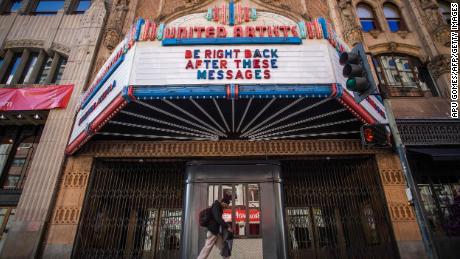
And still, the theaters are closed...

Never did I imagine one year ago, or at any time n my life really, that I would be living through an extended period where I would not only not be going to the movies, but that the theaters themselves would be closed due to a global pandemic. Even as the world is opening up, either too slowly or too quickly depending upon your perceptions, I know that for myself, that as much as I want to return to the movie theaters, I am not ready for I do not believe for a moment that it is safe enough. 

Regardless, Savage Cinema has remained busy and in fact, I do need to return to my Time Capsule series which has two more segments (and a mini segment) to go before being complete--I have come too far to quit now.

I do have anew review to get started on and I wanted to still screen one selection I did not have time for  last month and then...there, of course, is this...
Hamilton Movie Review: Lin-Manuel Miranda Creates Magic As He ...
 Yes indeed, as I write, the long awaited film version of the mammoth Broadway production has now hit streaming and I need to carve out time to get myself to seeing it, at long last. 

So...here we are still, in movie theater stasis just awaiting the day to all be sitting in the dark together for a shared experience. I long for that day to come back but only when we can do so, and then, do it all over again.